Preparing a London Rental for Viewings: What Actually Wins Applications

London renters view a lot of property, fast — often several in an evening — and they decide quickly. By the time an applicant has stood in your hallway for two minutes, the decision is largely made; the rest of the viewing is confirmation. That is not a reason to despair, it is a reason to prepare: presentation is the one letting variable entirely under your control, and it costs far less than the void weeks it prevents. Here is what actually moves applicants, in rough order of impact.
Deep clean like you mean it
Nothing outperforms cleanliness — not staging, not fresh paint, not clever photography. Applicants read cleanliness as a proxy for how the property is managed, and they are right to. A professional end-of-tenancy deep clean covers what casual cleaning misses: oven and extractor, grout and silicone, inside windows, skirting, light switches, the tops of doors. Limescale on a shower screen or a stale fridge can undo an otherwise excellent flat. If you use a professional cleaning service between tenancies, schedule it to finish the day before photography, so the property is photographed — and viewed — at its absolute best.
Fix the small things — they read as big things
- Dripping taps, loose handles, sticking doors and rattling extractor fans — an hour of a handyman's time
- Every lightbulb working, and all the same colour temperature (warm white reads best in period property)
- Sealant and grout refreshed in bathrooms — one of the cheapest transformations available
- Scuffed high-traffic walls touched up; full redecoration only where it is genuinely tired
- Bins cleaned and hidden, post cleared, and any trace of damp smell investigated properly, not masked
Applicants extrapolate: a dripping tap on viewing day tells them repairs will be slow all year. The reverse is also true — a property where everything visibly works signals a landlord worth renting from.
Light, air and smell: the three-minute impression
Before every viewing: open the curtains fully, turn on every lamp even in daylight, air the property for ten minutes, and deal with smell honestly — bins out, no cooking beforehand, no overpowering air freshener (which applicants read, correctly, as concealment). If the viewing is after dark, which is most of them in a London winter, lighting does the work daylight cannot: warm, working bulbs in every room, no dead corners. In colder months, have the heating on and comfortable an hour before the first slot — a cold flat feels like a neglected one.
Photography is your first viewing
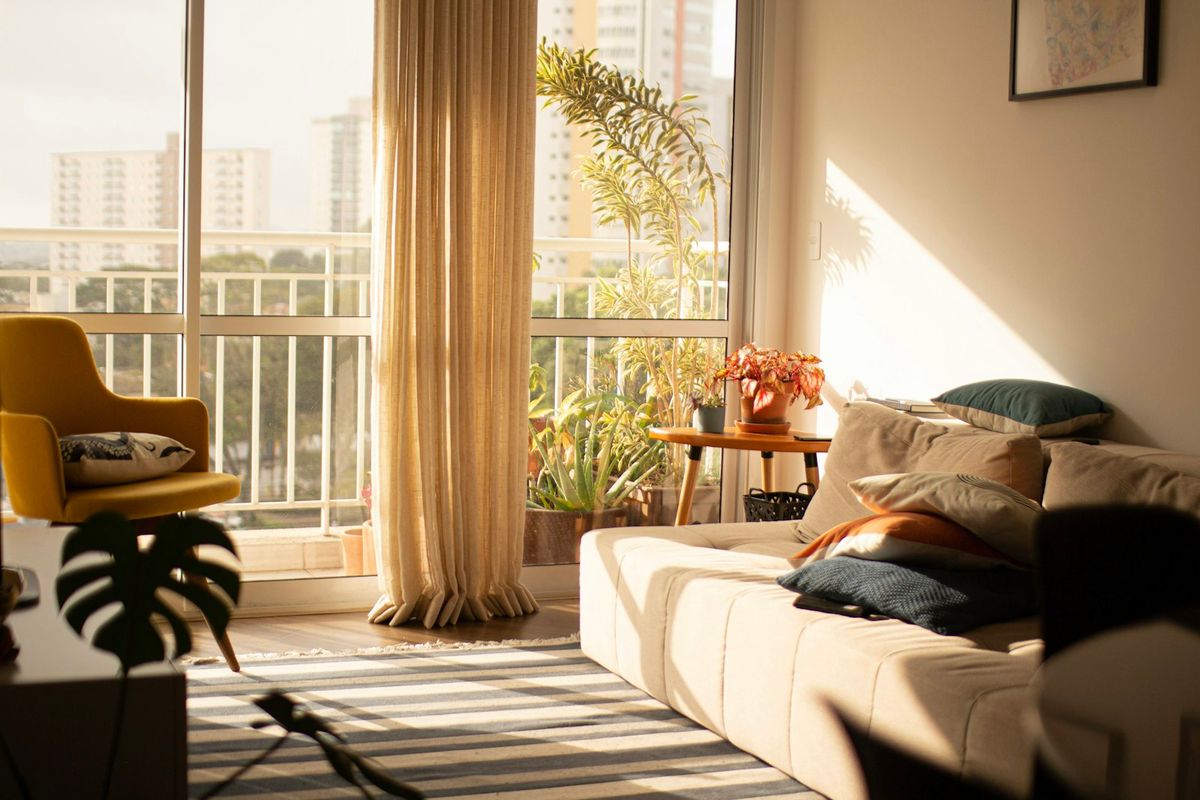
Most applicants reject your property from the listing, not the doorstep — the photos are the first viewing, and in practice the one with the highest drop-off. Professional photography costs little against a single week of void and repays it many times over: shot in daylight, wide but honest, with the property cleaned and decluttered first. Include a floorplan; London renters plan furniture before they book viewings, and listings with floorplans convert measurably better. Write the listing for the reader: exact nearest stations and walk times, council tax band, which bills if any are included, and honest room dimensions.
The approach: your listing's first three seconds, in person
Applicants start judging before the front door opens, and in much of London the approach is shared: a communal hallway, an entryphone, a front garden that belongs to everyone and therefore no one. Do what you can. Sweep the path, clear the leaflets and free newspapers from behind the communal door, make sure the entryphone label is legible and the hallway bulb works. If the block is professionally managed, viewing-season is a good moment to report anything below standard in the common parts — a tired communal hallway drags down every flat behind it, which is an argument worth making to your managing agent in exactly those terms. For houses, ten minutes on bins, the front gate and the doorstep repays itself on every single viewing. None of this is glamorous; all of it is the difference between an applicant who walks in expecting to like the property and one who walks in looking for confirmation of a doubt.
Furnished, unfurnished or somewhere in between
Match the market for your property type. Small central flats aimed at young professionals usually let faster furnished; family houses further out usually let better unfurnished, because families bring their lives with them. Whatever you choose, remove tired furniture rather than leaving it — a clean empty room beats a room with a sagging sofa. If letting furnished, remember upholstered furniture must carry fire safety labels. And be consistent between the listing and reality: if the photos show the property furnished but it will let unfurnished, say so prominently — applicants who feel misled at the viewing rarely apply, however good the flat.
Applicants do not rent square footage. They rent the feeling that this is a place someone will look after — and presentation is how you prove it before a word is spoken.
Run viewings like you want the tenancy
Respond to enquiries within hours — in London, the first well-organised responder gets the best applicants. Offer evening and weekend slots, arrive early, and have answers ready on the questions every serious applicant asks: bills, council tax band, EPC, internet speed, and what the building is like to live in. Block viewings sensibly rather than scattering them across a week — it respects your time and any sitting tenant's, and it lets you compare applicants while impressions are fresh rather than from memory. Where the property is tenanted, give proper notice, respect the tenants and ideally view when they are out; a resentful sitting tenant is the worst co-host in lettings. And when the applications arrive, move quickly but check properly — winning the application is only a win if the tenant is right, which is where referencing done properly takes over.
The pre-viewing checklist
- Professional deep clean completed, kitchen and bathrooms to hotel standard
- Every minor defect fixed: taps, bulbs, handles, sealant
- Professional photos and floorplan on the listing, written with stations and specifics
- Property aired, lit and smelling of nothing before each viewing
- Answers prepared: bills, broadband, council tax band, EPC rating
- Application and referencing process ready to start the same day
Presentation is one of the levers that keeps empty weeks rare — the others are pricing and speed, which we cover in what void periods really cost. If you would rather hand the whole letting to a team that does this every week — preparation, photography, viewings and referencing — our tenant sourcing service exists for exactly that. Request a quote and we will tell you honestly what your property needs before it goes to market.
Found this useful? Pass it on.